
Tips from our coaches
Blog: training, nutrition & health
All posts
15 posts
Training tips
On Field Rehab nach Kreuzbandverletzung: sicher zurück in den Sport
Rehab and surgical techniques after an (anterior) cruciate ligament injury have developed and improved significantly in recent years. Yet re-injury rates and the share of people who don't return to…
Read moreTraining during pregnancy
Training während und nach der Schwangerschaft: nicht ob, sondern wie
Background: many pregnant women are unsure how long they can keep exercising, or when they should or may start again. Is strength training or jumping dangerous during pregnancy? What happens to the pelvic floor during…
Read moreTestimonials
Erfahrungen unserer Teilnehmer
What do our members say? Andi from Heidelberg: "After almost four months of training with Josh in the OutdoorCircuit, I've not only lost more than 5 kg but literally feel lighter, more mobile and physically and…
Read moreTraining tips
OutdoorCircuit: Zirkeltraining im Freien
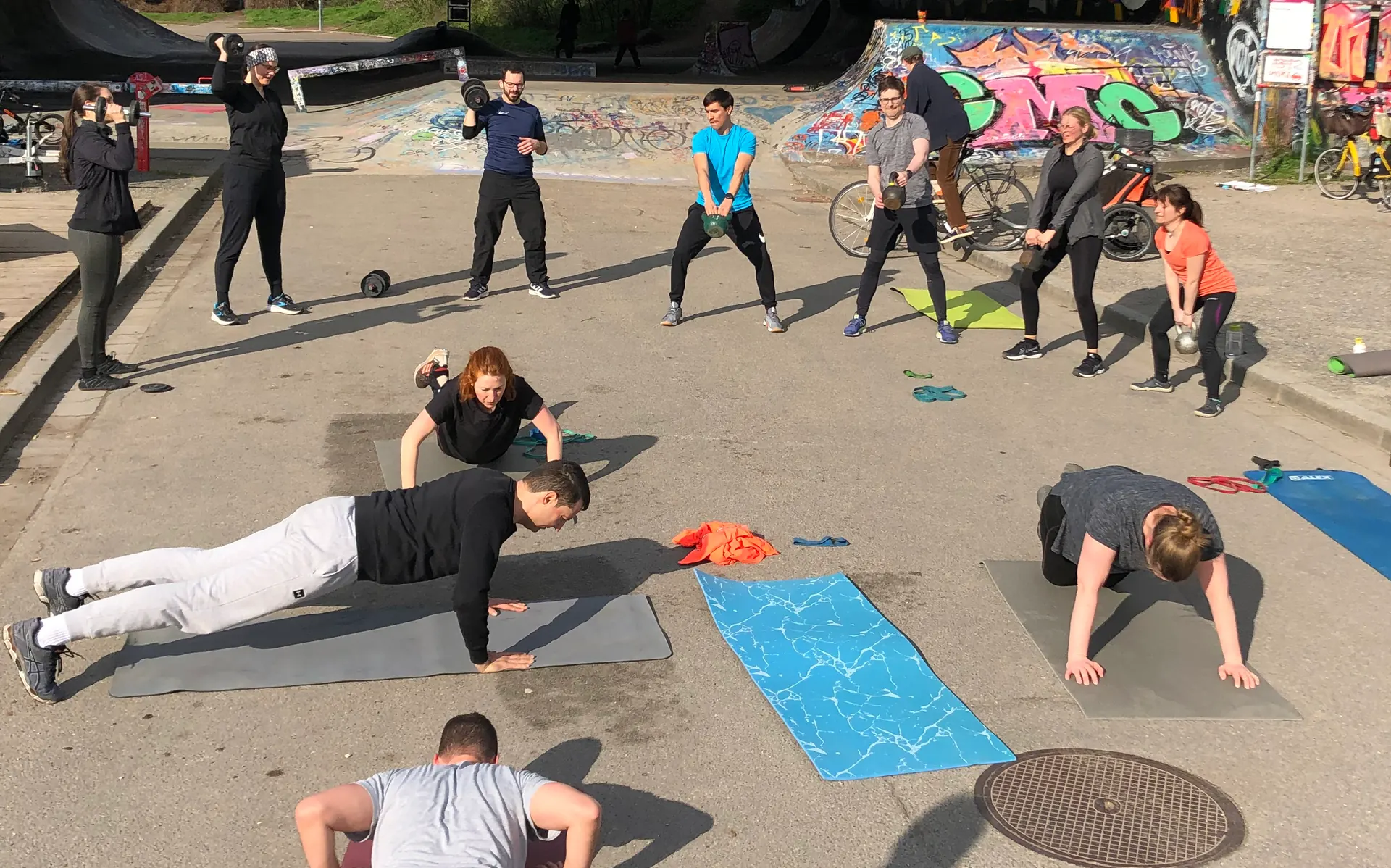
Our recipe for success: maximum calorie burn, maximum fun. The OUTDOORCIRCUIT idea: the OutdoorCircuit movement is more than a workout or an outdoor bootcamp – it's an experience. Circuit training and fitness trails have a long and successful…
Read moreTraining tips
HIIT: Was bringt High Intensity Interval Training?
Most people have probably heard of High Intensity Interval Training. But does this very demanding method have advantages over a more relaxed workout?
Read moreNutrition
Detox-Kuren: Was bringen sie dem Körper?
How do detox cures help the body? Many nutrition-conscious people have asked this in recent years – detox cures are on trend. But how helpful are they really? What should you watch out for? Is there a yo-yo effect? How healthy is it to go without solid food? These questions and who […]
Read moreNutrition · Supplements
Vitamin B12 on a vegetarian and vegan diet
Vitamin B12 is an essential vitamin: it's vital for us and must come from food, because our body can't produce it itself.
Read moreFighting pain · Training tips
Faszientraining: Was sind Faszien und wie trainierst du sie?
Fascia – you hear the term all the time. It has something to do with the foam roller, but what exactly is fascia? And how can you train it?
Read moreTraining tips
Sport im Winter: Macht Outdoor-Training bei Kälte Sinn?
Here I'll explain how to stay fit in winter without a gym – and why training in low temperatures is even a little more effective.
Read moreNutrition · Supplements
Magnesium bei Muskelkrämpfen: Hilft es wirklich?
Magnesium is a mineral and one of the essential nutrients: it's vital for the body and must come from food, because the body can't produce it itself.
Read moreWeight loss · Nutrition
Intermittierendes Fasten: Fakten, Varianten & Tipps
There are many ways to lose weight. One is a healthy eating rhythm – intermittent fasting, which has nothing to do with classic fasting. Unlike real fasting, you do actually eat.
Read moreFighting pain · Training tips
Impingement-Syndrom: Übungen für Zuhause
Impingement syndrome isn't caused by an acute injury – it mainly results from a deficit in the muscles responsible for shoulder stability.
Read moreTraining tips
Outdoor Fitness: Warum draußen trainieren?
Wondering what the benefits of outdoor training are and why you should train outside with us? Simple – there are loads of reasons!
Read moreTraining tips
Preventing muscle soreness and treating it with home remedies
Muscle soreness is the muscle pain that very often follows exercise. For a long time, people thought excess lactic acid was what made the muscles hurt.
Read moreFighting pain · Training tips
Rücken stärken: Übungen bei Rückenschmerzen
Everyone knows back pain. But not all back pain is the same. Various causes can trigger it, so it's never unspecific.
Read moreFighting pain · Training tips
Nackenverspannungen: Übungen zum Vorbeugen und Lösen
Sideways, forwards or backwards: the neck is the most mobile part of the spine. The high flexibility of the cervical spine also allows rotation.
Read more