Vitamin B12 is an essential vitamin: it's vital for us and must come from food, because our body can't produce it itself.
Most people have heard of vitamin B12 at some point. Isn't that what vegetarians and vegans have to swallow in tablet form? Do you have to take it too if you eat a lot of fruit? After all, fruit contains all the vitamins, or doesn't it?
What is vitamin B12?
Vitamin B12 is an essential vitamin, which means that it is vital for us and has to be supplied through food, because our body can't produce it itself.
Vitamin B12 is stored in the liver, so the body can compensate well for a temporarily insufficient intake. However, once the stores are used up and not enough vitamin B12 is supplied, deficiency symptoms occur.
Vitamin B12 is important for many processes in the body. For example, it is involved in forming red blood cells and forming the genetic material DNA and RNA (and therefore in cell division and cell growth). It also supports the uptake of folic acid into the cells.
Which foods contain vitamin B12?
Vitamin B12 is found mainly in animal foods such as meat, fish, eggs and cheese.
The vegetarian foods richest in vitamin B12 are Camembert (3.1 µg/100g), Emmental (3.1 µg/100g), Edam (2.0 µg/100g) and chicken egg yolk (2.0 µg/100g).
Herbivorous animals take in vitamin B12 through soil and faeces contaminating their food. Carnivorous animals take in vitamin B12 through the meat of their prey. In today's factory farming, however, the animals hardly get to see daylight anymore, let alone a pasture. Natural feeding is therefore barely possible, which is why the animals' feed is often fortified with vitamin B12. So people who eat meat and fish also indirectly take in additional vitamin B12.
In both animals and humans, vitamin B12 is produced by microorganisms in the gut. However, this only happens in the large intestine, i.e. after the point of absorption in the small intestine. Most of this vitamin B12 is then excreted with the faeces, which is why absorbing the self-produced vitamin B12 is usually impossible.
The only reliable plant-based source of vitamin B12 is the alga chlorella, which contains 80µg per 100g. That beats all animal foods, but you usually only consume very small amounts per serving. That's why, as the only source of vitamin B12, it is usually not sufficient.
Who should take additional vitamin B12?
Vegetarians, who don't eat meat, and vegans, who don't eat any animal foods, should therefore supplement vitamin B12.
Thanks to the hygienic processing of our food, it no longer carries contaminants such as dirt or faeces, which is why no vitamin B12 is taken in through vegetables and the like anymore.
But taking it additionally can also be beneficial for people who eat meat.
That's because vitamin B12 is sensitive to heat, so part of the vitamin is lost during cooking. Furthermore, meat is harder to digest than cheese and fish. Put simply, vitamin B12 attaches itself to proteins. The more easily these can be digested, the better the vitamin B12 can be absorbed. Eggs and meat do contain vitamin B12, but both foods are hard to digest and are usually eaten cooked, which means vitamin B12 is already lost during preparation.
How much vitamin B12 should I take?
According to the German Nutrition Society (DGE), an adult's daily requirement is 3 µg. However, current studies point to a requirement of 7-10 µg.
People who smoke, drink a lot of alcohol or suffer from a gastrointestinal disease usually need more. According to the DGE, pregnant and breastfeeding women also need at least 3.5 µg and 4 µg daily respectively.
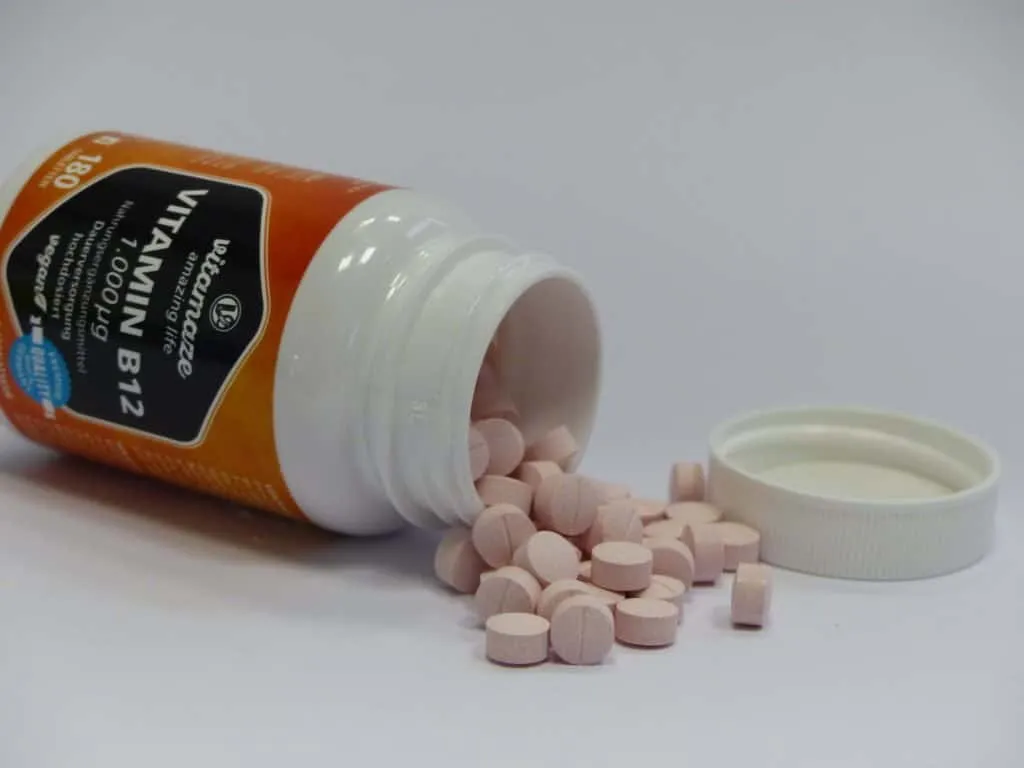
Since only very small amounts of the vitamin B12 supplied can be absorbed at any one time, oral supplements are usually very highly dosed. Since excess B12 that is taken in is simply excreted in the urine, no overdoses are known and the DGE has set no upper limit for daily intake. However, you should keep in mind that a pointless overdose can of course still have consequences, and you should treat your own body with care.
In general, 500 to 1000µg per day is a good dose (high dosage because of the low absorption capacity), but for some people taking this dose every 2-3 days may also be enough. This should generally be discussed with a doctor. They can also test the B12 level in your blood and recommend an optimal dose on that basis.
What happens with a vitamin B12 deficiency?
With an insufficient intake of vitamin B12, the body's stores are emptied first, and at this stage usually only mild symptoms appear. Once the body's stores are empty, however, severe symptoms occur. The mild symptoms include tiredness, susceptibility to infections and mood swings, among others. Once the stores are empty, digestive problems, coordination disorders, tingling in the limbs, anaemia and nerve damage can occur, among others.
If you experience such symptoms, you should definitely see a doctor and have your B12 level tested.